You found a bakery that is offering gluten-free cakes in Dubai. The listing looks good. The photos are beautiful. You place the order, feeling relieved.
Then the cake arrives. Your guest with coeliac disease takes one bite. By the next morning, they are unwell. Not because the cake contained gluten intentionally — but because nobody asked the right questions before baking it.
This is one of the most frequent and the most painful errors that people make while ordering a gluten free cake Dubai. It's because most people don't understand that there is a big difference between coeliac disease and gluten sensitivity. The cake that makes a perfect treat for one man can be quite a disaster for another.
Gluten Sensitivity and Coeliac Disease Are Not Same
This distinction matters a lot when you are going to order a cake for a special occasion.
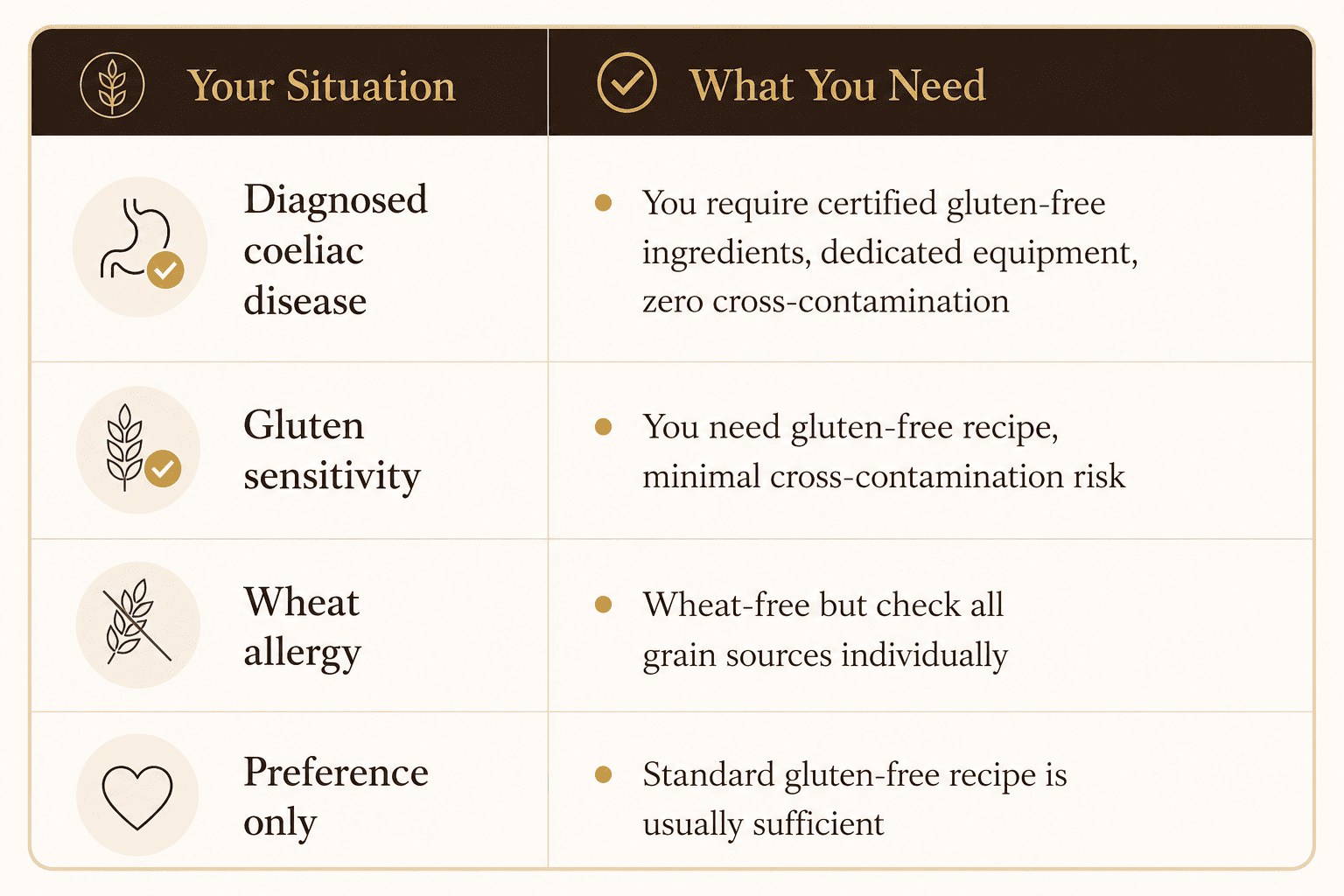
Someone who is gluten sensitive may eat a cake that is baked in a shared kitchen without experiencing any adverse effects. A coeliac sufferer on the other hand, can suffer a very bad reaction from a cake that has had only normal flour brushed on its surface.
Same label. Very different risk.
Why Cross-Contamination Is the Real Problem
The majority of gluten-free baking disasters aren't due to the recipe. They are about the kitchen.
A bakery might be able to bake a cake with certified gluten-free flour and the cake will be harmful to someone with coeliac disease. How? The thing is shared equipment. A mixing bowl used for a regular sponge that morning. A spatula not thoroughly cleaned. Small dust particles of flour remain in the air after a previous baking.
This is known as cross-contamination and cannot be seen. You can't taste, see or smell it. However for those with coeliac disease, it is sufficient to cause a severe reaction.
Signs a bakery takes cross-contamination seriously:
- A dedicated gluten-free equipment, which never comes in contact with regular flour
- Separate storage area for gluten-free food items
- Scheduled gluten-free baking sessions, usually early in the day before other baking begins
- Staff trained to understand coeliac requirements specifically
- Transparent communication about their kitchen setup
When a bakery is unable to provide a clearly defined answer of how they prevent cross contamination, that's your answer.
What to Ask Before You Order a Gluten Free Cake in Dubai
Please do not take any words for granted from the menu description. Ask directly.
For coeliac disease — ask these questions:
- Is your kitchen completely gluten-free or do you bake in the same kitchen with regular flour?
- Do you have separate equipments or kitchen utensils for the orders of gluten free cake?
- Do you have gluten-free ingredients that are certified as well as kept away?
- Are your staff aware about the difference between gluten-free and coeliac-safe ingredients?
- Are there no wheat, barley, rye or oat ingredients? Confirm this as well.
For gluten sensitivity — ask these questions:
- What is your preferred alternative to normal flour?
- Are there any hidden gluten in the cake, such as some baking powders or natural flavours?
- Is the texture similar to a traditional cake?
The discussion you have, before placing your order, provides you with all the information about the baking studio you are working with.
What Goes into a Proper Gluten-Free Cake?
The flour is just the beginning. A good gluten-free cake must be made with careful consideration of ingredients.
Some of the Common alternative’s gluten-free flour:
- Almond flour that is rich, moist, as well as naturally sweet
- Rice flour — light texture, neutral flavour
- Coconut flour — dense, needs more liquid to balance
- Buckwheat flour which is earthy, works well with chocolate and spice
- Certified gluten-free oat flour that is only safe for gluten sensitivity, not coeliac patient
Ingredients that sometimes hide gluten:
- Baking powder — some brands contain wheat starch
- Vanilla extract — certain commercial versions use grain alcohol
- Chocolate — some contain malt or barley derivatives
- Icing sugar — occasionally processed with shared equipment
A skilled baker reads every label. Not just the headline ingredient.
Gluten-Free Flavours That Actually Deliver
People worry that gluten-free means compromising on taste. If it doesn't with the right technique and ingredients.
Flavours that work exceptionally well gluten-free:
- The pair of dark chocolate and almond is naturally dense and indulgent.
- Lemon and polenta — bright, moist, with a beautiful crumb
- Orange and cardamom with almond flour base
- Cream cheese frost cake with carrot cake
- Use pistachio and rose water, which are light and aromatic, in a diluted manner.
A customer ordered a gluten-free pistachio cake for the occasion of her daughter's birthday from Brulee Patisserie. She had been observing her daughter for years sitting around without a cake. She said watching her eat that birthday cake without worry was the best part of the entire birthday party.
That is exactly what a properly made gluten-free cake should do. Remove the worry. Bring back the joy.
A Quick Guide: Which Cake Do You Actually Need?
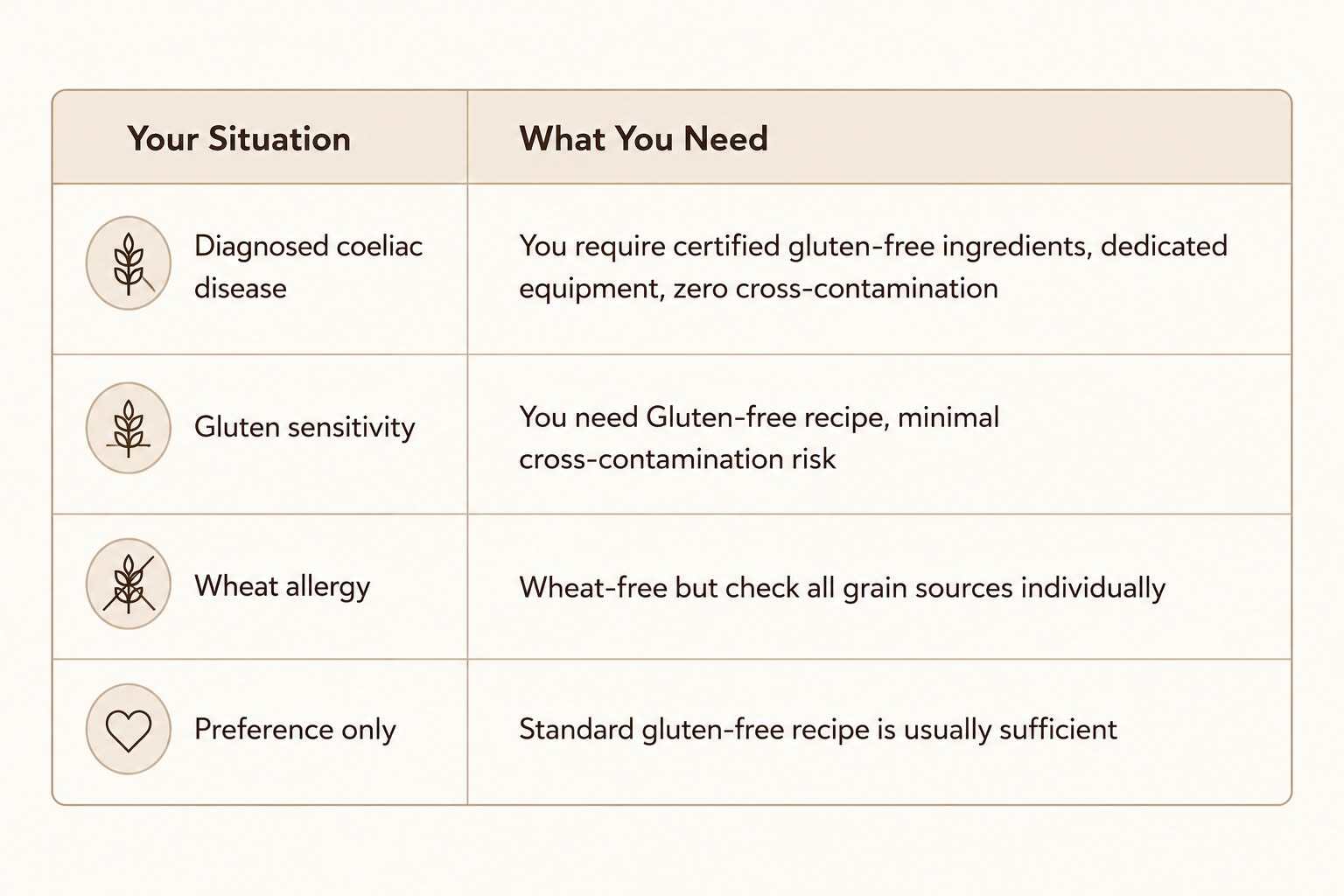
Be honest with your bakery about which category applies. It helps them serve you properly and keeps your guests safe.
How Far Ahead Should You Order?
Gluten-free cakes — especially coeliac-safe ones — need more preparation time than a standard order.
Recommended timeline:
- 3 to 4 weeks ahead — contact the studio, explain the specific dietary need
- 2 to 3 weeks ahead — confirm ingredients, equipment, and baking schedule
- 1 week ahead — final confirmation of delivery, storage, and setup details
- Day before — check in to confirm everything is on track
Rushing a coeliac-safe order is not worth the risk. Allow the baking studio enough time to get it right.
FAQ
What is the difference between a gluten free cake and coeliac safe cake Dubai?
They do not necessarily mean the same. A gluten free cake may simply mean that gluten containing ingredients were left out of the recipe. For someone with coeliac disease, there is another concern: cross contamination. The cake may be made with gluten free ingredients but prepared on the same surfaces or with the same tools used for regular cakes. That can still be a problem.
Can somebody with coeliac disease eat the gluten free cake from any bakery in Dubai?
Not necessarily. It's at this point that it's best to take a moment to order carefully. Inquire with the bakery how they make their gluten free cakes. Are they eating with their own plate and fork? Is the cake being made outside of the norm of flour and cakes? Any residue of flour on a work surface can be significant.
A bakery should be able to explain what it does in order to encourage a gluten free cake rather than just stating it is gluten free.
What flour is used for gluten free cake Dubai?
This is a question that has no right or wrong answer, as it will depend on the type of cake you're looking for.
Almond flour typically adds to the richness and softness of cakes. Rice flour can help to make the cake lighter. Buckwheat can add a richer flavor to chocolate cakes, and is surprisingly effective.
Some bakers will use a combination of two or three gluten free flours instead of one. If you are looking for a certain texture or taste, make sure to inquire from the bakery about what type of flour mix they are using.
The Takeaway
Not all gluten-free foods are safe for all people. Coeliac disease requires a completely different level of care — from the flour to the frosting to the baking tray it was made on.
Know what your guest needs. Make the right inquiries. And discover a studio that knows the difference, without having to repeat it twice.
Your guest deserves a cake that tastes incredible and will keep them safe. Talk to Brulee Patisserie today about your gluten-free order.